By Nancy Kimmel, MSN, FNP, RN, PhD CHMM, MSN-FNP-BC — an authoritative, clinically focused guide for student nurses, nurses, anesthesia techs, veterinary techs, and dentists. This comprehensive resource blends physiology, clinical technique, pharmacology, geriatrics, teaching strategies, and hands-on practice problems to help you master IV drip rate calculations and safe IV therapy.
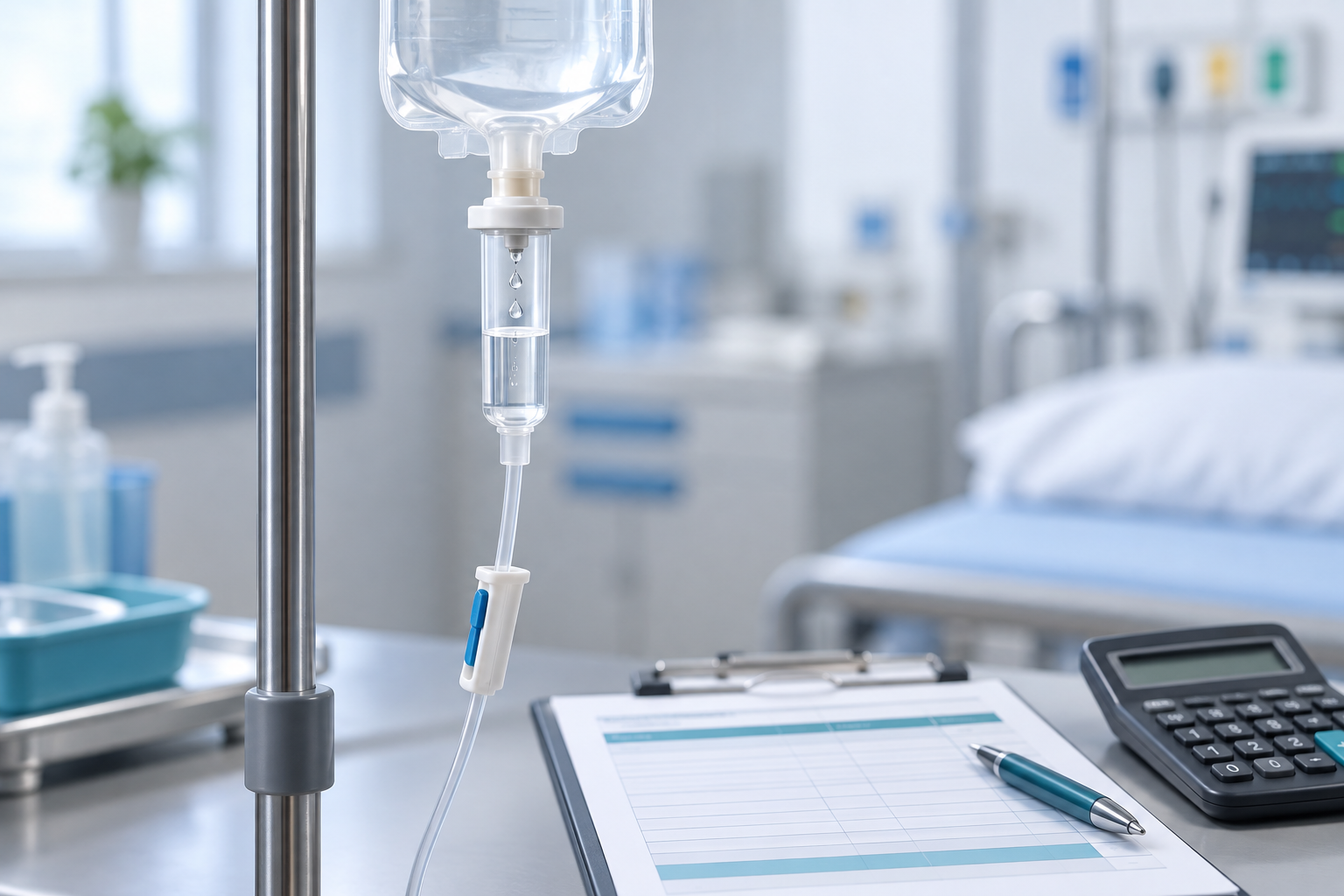
IV Drip Rate Calculations at a Glance
- Pump rate: mL/hr = total volume (mL) ÷ total time (hours).
- Gravity rate: gtt/min = volume (mL) × drop factor (gtt/mL) ÷ time (minutes).
- Safety check: confirm the order, units, tubing drop factor, patient factors, and institutional rounding policy.
Why Accurate IV Drip Rate Calculations Matter
Intravenous (IV) therapy is a cornerstone of contemporary clinical care used for blood collection, chemotherapy, immunosuppressants, vitamin therapy, hydration, and medication delivery. Because the vascular compartment distributes infusions rapidly, even small errors in rate or concentration can produce systemic complications including infections, tissue necrosis, extravasation injuries, air embolism, fluid overload, and life‑threatening cardiopulmonary instability. This article presents core formulas, step‑by‑step examples, safety checkpoints, and practice problems to ensure proficiency.
Fundamentals of IV Fluids and Osmolarity
Before calculating drip rates, clinicians must understand the type of fluid being administered and physiologic effects.
- Normal Saline (0.9% NaCl): Isotonic to plasma and appropriate for most fluid boluses and wide use. Normal blood pH is 7.35–7.45; isotonic fluids aim to maintain intravascular volume without shifting water across membranes.
- Hypertonic Solutions: Draw fluid into the vascular space from the interstitium (e.g., 3% NaCl). Used in cerebral edema or severe hyponatremia but risky for congestive heart failure (CHF) and elderly patients—can precipitate cardiovascular overload.
- Hypotonic Solutions: Push fluid into cells and interstitium (e.g., 0.45% NaCl). Useful in cellular dehydration but can cause edema if used inappropriately.
Always read labels carefully—saline is different from solutions that contain medications (e.g., atropine, lidocaine admixtures). Mistaking fluid type or drug can be catastrophic. When medications are dosed via IV, remember the need to wait an appropriate dwell time or flush interval before drawing blood from the same line or sampling through the limb; protocol depends on institutional policy and medication kinetics.
Clinical Anatomy and Venipuncture Technique
Safe IV therapy begins with proper site selection and insertion technique.
- Vein selection: The antecubital fossa is a frequent choice—cephalic, basilic, and median cubital veins are commonly used. Trace veins for an inch proximally to ensure length for catheter securement.
- Hands and lower extremities: Avoid when possible, particularly in diabetic patients, peripheral vascular disease, or when lymph node dissection has occurred. These sites have higher rates of phlebitis and infiltration.
- Insertion angle and bevel: Insert at 15–28 degrees with the bevel up. A shallow approach reduces risk of puncturing through the vein wall.
- Flashback: Watch for a flash of blood in the chamber; this verifies intraluminal entry. If you do not see flashback and saline flush resistance occurs, reposition—resistance on flush often means the catheter is not intravascular (or kinked/occluded).
- Don’t “push” too hard: Excess force can penetrate through the vessel, cause hematoma, or injure surrounding tissue.
Sterile technique is nonnegotiable. Use an appropriate antiseptic such as chlorhexidine for skin prep with a one‑minute scrub (or institutional guideline) to reduce risk of catheter‑related bloodstream infection. The needle and catheter traverse the epidermis, dermis, hypodermis (subcutaneous tissue), and the venous tunica before entering the bloodstream—each layer carries specific infection risk if asepsis is not strictly observed.
Complications of Improper Rate or Technique
Fast or uncontrolled infusion rates can precipitate:
- Cardiovascular overload: tachycardia, hypertension, shortness of breath, hypoxemia—can escalate to pulmonary edema and cardiac arrest (code blue).
- Electrolyte disturbances: rapid correction of sodium can cause osmotic demyelination; too-rapid potassium can cause arrhythmias.
- Local complications: infiltration, extravasation, phlebitis, tissue necrosis.
- Systemic infections: catheter‑associated bloodstream infection (CABSI) from poor sterile technique or prolonged catheter dwell.
- Air embolism: from open tubing, central line disconnection, or poor priming technique.
Professional Responsibilities and Documentation
Accurate charting is both clinical best practice and legal protection. Document:
- Time of insertion and removal.
- Catheter gauge and device type.
- Vein location and laterality (e.g., “left antecubital, cephalic”).
- Patient response and any complications (e.g., pain, swelling, infiltration grade).
- Medication administration details: drug, dose, rate, flush details.
Know your scope of practice. Medical assistants (MAs) and other support staff must consult supervisors when in doubt. If a procedure or dose feels beyond your competence, admit it and seek support—this is professional responsibility, not weakness.
Who Should Read This
This article is designed for student nurses, nurses, anesthesia techs, veterinary techs, and dentists who administer IV therapies or are involved in clinical decision‑making about IV fluid and medication delivery. It is also a resource for educators preparing to teach IV therapy concepts.
Core IV Drip Rate Calculations and Formulas
IV rate calculations fall into two broad categories: volumetric rates (mL/hour) for infusion pumps and gravity drip rates (gtt/min) for roller clamps and non‑pump administration. The fundamental calculations translate prescribed volume/time into appropriate pump settings or drops per minute based on the tubing’s drop factor.
Essential Formulas
| Purpose | Formula | Notes |
|---|---|---|
| mL per hour (infusion pump) | mL/hr = Total volume (mL) ÷ Total time (hr) | Used directly when programming pumps. |
| gtt per minute (gravity) | gtt/min = (Total volume (mL) × Drop factor (gtt/mL)) ÷ Total time (min) | Drop factors commonly: microdrip 60 gtt/mL; macrodrip 10, 15, or 20 gtt/mL—check the tubing package. |
| Time to infuse a volume | Minutes = (Volume (mL) × Drop factor) ÷ gtt/min | Rearrangement of gtt/min formula to solve for time. |
| Rate for weight-based dosing | mL/hr = (Dose mg/kg/hr ÷ Concentration mg/mL) | Convert units carefully; often used for vasoactive drips and chemotherapy. |
Always check the tubing’s drop factor. A 60 gtt/mL set (microdrip) delivers 60 drops per mL and is frequently used for precise low-volume infusions and pediatric or geriatric patients. Macrodrip sets vary—10, 15, or 20 gtt/mL—so calculations must reflect the set in use.
IV Drip Rate Calculation Examples
Example 1 — Gravity Drip with Macrodrip Set
Order: 1,000 mL Normal Saline to be infused over 8 hours using a 20 gtt/mL tubing set. Calculate drops per minute.
- Total volume = 1000 mL
- Total time = 8 hr = 8 × 60 = 480 minutes
- Drop factor = 20 gtt/mL
- gtt/min = (1000 mL × 20 gtt/mL) ÷ 480 min = 20,000 ÷ 480 ≈ 41.67 gtt/min
- Round to nearest whole drop = 42 gtt/min.
Example 2 — Infusion Pump Setting
Order: 500 mL D5W over 4 hours using pump. What is the mL/hr?
- Total volume = 500 mL; Time = 4 hr
- mL/hr = 500 ÷ 4 = 125 mL/hr
- Program pump to 125 mL/hr.
Example 3 — Microdrip for Pediatrics
Order: 150 mL over 2 hours using microdrip (60 gtt/mL).
- Time = 2 hr = 120 min
- gtt/min = (150 × 60) ÷ 120 = 9000 ÷ 120 = 75 gtt/min
Example 4 — Weight‑Based Infusion (Vasoactive Agent)
Order: Dopamine at 5 mcg/kg/min for a 70 kg adult. Concentration prepared: 400 mg in 250 mL (i.e., 400,000 mcg/250 mL = 1600 mcg/mL). Determine mL/hr.
- Dose = 5 mcg/kg/min × 70 kg = 350 mcg/min
- Concentration = 1600 mcg/mL
- mL/min = 350 ÷ 1600 = 0.21875 mL/min
- mL/hr = 0.21875 × 60 = 13.125 mL/hr → set pump to 13.1 or 13 mL/hr per institutional rounding rules
Programming and Verifying IV Drip Rate Calculations
- Double‑check all calculations with a second clinician when administering high‑risk medications (e.g., vasoactive drips, insulin, potassium, chemotherapy).
- Ensure correct tubing and drop factor are used. Label tubing with date and time of insertion as per facility policy.
- When using programmable pumps, confirm the pump clock and infusion programming (e.g., bolus limits). Observe alarm parameters.
- Watch for resistance on flush—if present, stop and reassess catheter patency. If resistance persists, discontinue and re-site per policy.
IV Drip Rate Calculations for Medications
Certain IV medications require specific rates and dilution. Intravenous push (IVP) drugs must be delivered over recommended time frames to avoid adverse events (e.g., rapid administration of potassium or calcium can cause arrhythmias). When administering drugs through IV lines already infusing other fluids, stop or slow the primary infusion per protocol, flush before and after medication as needed, and do not apply a tourniquet on an arm with an active IV line.
IV Drip Rate Calculations for Older Adults
Elderly patients are uniquely vulnerable to IV complications. The National Center for Aging and Development (NCAD) and the National Institute on Aging (NIA) emphasize physiologic changes that alter IV therapy responses: decreased total body water, reduced renal clearance, fragile veins, and skin thinning. When teaching student nurses, nurses, anesthesia techs, veterinary techs, and dentists about geriatric IV care:
- Prefer microdrip sets for precise low-volume administration (reduces risk of volume overload).
- Consider lower initial infusion speeds and titrate carefully; watch for signs of cardiovascular overload—tachycardia, rising BP, respiratory distress, low oxygen saturation.
- Use the most distal, least fragile veins first and support fragile skin with padding and securement devices to avoid skin tears.
- Consult NIA resources for age‑specific pharmacokinetics and dosing adjustments: NIA.
Infection Prevention and Aseptic Technique
Catheter‑associated infections are preventable with strict aseptic technique and maintenance. Use chlorhexidine with a one‑minute cleanse when appropriate. Observe catheter insertion bundles and dressing protocols. For authoritative infection control guidance, review CDC recommendations: CDC catheter-infection prevention guidance.
Teaching IV Therapy: Instructor Principles and Erikson’s Psychosocial Theory
Teaching IV therapy effectively requires more than technical skills. Instructors should embody preparation, passion, and patience and apply continuous learning strategies.
Preparation, Passion, Patience
- Preparation: Prepare lesson plans, checklists, simulation scenarios, and safety check algorithms. Provide learners with pre-reading and competency checklists.
- Passion: Enthusiasm translates into learner engagement. Share clinical stories that emphasize consequences and successes to increase retention.
- Patience: Allow learners to fail safely in simulation environments and debrief thoroughly to reinforce correct behaviors.
Managing Classroom Dynamics
Balance hands-on practice with didactic sessions. Use small‑group skills labs for student nurses and interdisciplinary sessions that include nurses, anesthesia techs, veterinary techs, and dentists where appropriate (e.g., sedation management, emergency access). Use skills checklists and observed structured clinical examinations (OSCEs) for assessment.
Erikson’s Theory Applied to Teaching Patients and Students
Erikson’s eight stages of psychosocial development provide a framework for tailoring communication and support during IV therapy education and patient teaching. Integrate Erikson into interactions:
- Infancy (Trust vs. Mistrust): Build trust with caregivers; demonstrate gentle handling and consistent technique when pediatric or neonatal IV placement is required.
- Toddler (Autonomy vs. Shame/Doubt): Encourage toddler choices (e.g., which arm to use) where safe.
- School-age (Industry vs. Inferiority): Provide simple tasks and praise—”You watched how the IV was set up and helped hold the tourniquet.”
- Adolescence (Identity vs. Role Confusion): Offer privacy and explanations about body image and procedure necessity.
- Young Adulthood (Intimacy vs. Isolation): Respect independence and involve in decision-making about care.
- Middle Adulthood (Generativity vs. Stagnation): Engage in shared decision-making, emphasizing contribution to their care.
- Older Adulthood (Integrity vs. Despair): Validate life experience, discuss goals of care and quality of life when deciding on IV therapies.
Applying Erikson to teaching helps educators and clinicians provide age-appropriate explanations, anticipate emotional responses, and improve adherence and satisfaction. This is especially valuable for student nurses and clinicians learning to communicate during IV procedures.
Special Populations: Pediatrics, Neonates, and Veterinary Patients
Infants and neonates require microdrip sets and meticulous dose calculations. For veterinary techs, species differences (blood volume per kg, vein anatomy) change calculation baselines. Always use weight-based dosing and species-appropriate equipment. For dental practitioners administering IV sedation, coordination with anesthesia techs and nurses is essential to ensure safe infusion rates and monitoring for cardiopulmonary compromise.
IV Drip Rate Calculation Practice Problems
These practice problems are structured to reinforce calculation skills and clinical judgment. Work them as a student nurse, nurse, anesthesia tech, veterinary tech, or dentist; then check your answers. For institutional protocols or high-risk med verification always perform independent double-checks.
Problem 1
Order: 750 mL lactated Ringer’s over 6 hours via a 15 gtt/mL macrodrip set. Calculate gtt/min.
Solution:
- Total time = 6 hr = 360 min
- gtt/min = (750 × 15) ÷ 360 = 11,250 ÷ 360 = 31.25 ≈ 31 gtt/min
Problem 2
Order: 250 mL of albumin to run over 30 minutes using a pump. What is mL/hr?
Solution:
- Time = 0.5 hr
- mL/hr = 250 ÷ 0.5 = 500 mL/hr
- Set pump to 500 mL/hr (and ensure monitoring for IF patient is fragile—albumin can cause rapid intravascular shifts).
Problem 3
Order: Heparin infusion at 18 units/kg/hr for a 60 kg patient. The bag concentration is 25,000 units in 250 mL. Calculate mL/hr.
Solution:
- Dose = 18 × 60 = 1,080 units/hr
- Concentration = 25,000 units ÷ 250 mL = 100 units/mL
- mL/hr = 1,080 ÷ 100 = 10.8 mL/hr → set pump to 10.8 mL/hr
Problem 4 — Pediatric
Order: 100 mL/kg over 8 hours for a 12 kg pediatric patient using 60 gtt/mL. Calculate gtt/min.
Solution:
- Total volume = 100 mL/kg × 12 kg = 1,200 mL
- Time = 8 hr = 480 min
- gtt/min = (1,200 × 60) ÷ 480 = 72,000 ÷ 480 = 150 gtt/min
- At 150 gtt/min using microdrip, prepare safeguards—this is high; consider pump use if available.
Problem 5 — Vet Tech Scenario
Order for a canine patient: 20 mL/kg bolus for a 25 kg dog. How many mL given? If administered over 15 minutes, and tubing is 20 gtt/mL, what is gtt/min?
Solution:
- Volume = 20 mL/kg × 25 kg = 500 mL
- Time = 15 min
- gtt/min = (500 × 20) ÷ 15 = 10,000 ÷ 15 ≈ 667 gtt/min → Not practical by gravity; use a pump or syringe driver for controlled bolus.
Common IV Drip Rate Calculation Pitfalls
- Failing to convert time units (hours ↔ minutes). Always convert to minutes for gtt/min calculations.
- Using wrong drop factor. Verify tubing packaging before calculation.
- Not accounting for medication concentration units (mg vs mcg, mEq vs mmol). Convert to consistent units before calculation.
- Rounding incorrectly. Use institutional rounding rules; when in doubt round to clinician safety (e.g., lower rate for risky infusions unless otherwise ordered).
- Ignoring patient factors—age, cardiac/renal function, existing IV patency, and signs of fluid overload.
Safety Checklist for IV Drip Rate Calculations
- Verify physician order and indication—IV therapy requires authorization.
- Confirm patient identity using two identifiers.
- Inspect the medication label and fluid type; confirm compatibility with existing infusions.
- Perform aseptic skin prep (chlorhexidine with one‑minute scrub according to policy).
- Choose appropriate vein and catheter gauge for therapy: larger gauge for rapid infusion, smaller for fragile veins.
- Secure catheter and label date/time. Document insertion site and catheter size.
- Calculate infusion rate and verify with a second clinician for high-risk meds.
- Monitor vital signs and the IV site regularly; document response and any issues (time, gauge, location, response).
When Things Go Wrong: Immediate Actions
If you observe signs of infiltration, extravasation, infection, or systemic intolerance (e.g., respiratory distress, chest pain, sudden hypotension), act quickly:
- Stop the infusion immediately.
- Leave the catheter in place if you suspect extravasation so antidote can be administered if required; if infiltration only and protocol indicates, remove per institutional guidelines.
- Notify the responsible provider immediately—do not delay for noncritical documentation.
- Document time, signs, interventions, and patient response in the medical record to protect both patient safety and legal accountability.
Resources and Further Reading
Authoritative resources for policy, dosing charts, and infection control:
- CDC catheter-infection prevention guidance — infection prevention and catheter care bundles.
- National Institutes of Health (NIH) — clinical trials, pharmacology resources, and evidence-based guidance.
- National Library of Medicine (NLM) — searchable literature via PubMed and MedlinePlus.
- National Institute on Aging (NIA) — geriatric pharmacology and care resources.
- National Association of Phlebotomy Training Programs (NAPTP) — phlebotomy training standards and resources.
- PCT Institute of Healthcare — educational resources for allied health professionals.
- Phlebotomy Career Training — certification training and career pathways for phlebotomists.
Professional Development and Continuous Learning
For instructors and clinicians alike, ongoing education is crucial. Maintain competence through:
- Simulation labs and skills assessments for student nurses, nurses, and techs.
- Interprofessional education that includes anesthesia techs and dentists when IV sedation or emergency access is discussed.
- Attending workshops and certifications offered by organizations such as PCT Institute of Healthcare and Phlebotomy Career Training.
- Reading current literature from NIH and NLM and following CDC infection control updates.
Legal and Ethical Considerations
Documentation of IV therapy—time, gauge, location, response—is not optional; it represents legal protection and a continuity-of-care instrument. If you are unsure about a therapy or calculation, consult your supervisor immediately. Admitting limits to your knowledge and seeking help demonstrates professionalism and protects the patient.
Practice Problem Set — Self‑Test
Attempt these without peeking at answers. They simulate scenarios you may encounter as a student nurse, nurse, anesthesia tech, veterinary tech, or dentist.
- Order: 1,500 mL NS over 24 hours with 15 gtt/mL set. Calculate gtt/min.
- Order: 100 mL of drug X to infuse over 10 minutes using pump. What mL/hr?
- A 50 kg pediatric patient needs 20 mL/kg bolus. Calculate the bolus volume and if given over 15 minutes with 60 gtt/mL, determine gtt/min.
- Vasopressor order: Norepinephrine 0.05 mcg/kg/min for a 80 kg patient. Bag is prepared at 8 mg in 250 mL (8,000 mcg/250 mL = 32 mcg/mL). Calculate mL/hr.
- Order: 500 mL D5W over 2 hours with a 20 gtt/mL set. Calculate gtt/min.
Answers (check after completing problems):
- 1,500 mL over 1440 min. gtt/min = (1500 × 15) ÷ 1440 = 22,500 ÷ 1440 ≈ 15.6 → 16 gtt/min.
- Time = 10 min = 0.1667 hr. mL/hr = 100 ÷ 0.1667 ≈ 600 mL/hr.
- Volume = 20 × 50 = 1000 mL. gtt/min = (1000 × 60) ÷ 15 = 60,000 ÷ 15 = 4,000 gtt/min → not feasible by gravity, use pump.
- Dose = 0.05 × 80 = 4 mcg/min. Concentration = 32 mcg/mL. mL/min = 4 ÷ 32 = 0.125 mL/min. mL/hr = 0.125 × 60 = 7.5 mL/hr.
- Time = 120 min. gtt/min = (500 × 20) ÷ 120 = 10,000 ÷ 120 ≈ 83.3 → 83 gtt/min.
Final Tips for Accurate IV Drip Rate Calculations
- When in doubt about whether a calculated rate is reasonable for the patient (e.g., high mL/hr for small or fragile patients), stop and consult. Safety first.
- Label all IV tubing and bags with contents, concentration, start time, and your initials per facility policy.
- Avoid tourniquets on arms with active IV lines. Tourniquets can alter infusion dynamics and pose infection or thrombotic risks.
- Regularly practice manual drip calculations even when pumps are available; pumps fail and manual calculation skills are essential for emergencies.
This resource integrates clinical technique, calculation methods, geriatric considerations from NCAD and NIA, teaching methodology including Erikson’s psychosocial stages, and professional responsibilities for student nurses, nurses, anesthesia techs, veterinary techs, and dentists. Use it as a learning guide, a teaching toolkit, and a practical reference at the bedside.
Frequently Asked Questions About IV Drip Rate Calculations
What is the formula for calculating an IV drip rate?
For gravity tubing, multiply the prescribed volume in milliliters by the tubing drop factor in gtt/mL, then divide by the infusion time in minutes. For a pump, divide volume in milliliters by time in hours to obtain mL/hr.
How do you choose the correct drop factor?
Read the factor printed on the administration-set packaging. Common macrodrip factors include 10, 15, or 20 gtt/mL; microdrip tubing is commonly 60 gtt/mL. Never assume a factor from memory.
When should an IV drip-rate calculation be independently checked?
Follow facility policy and use an independent check for high-alert medications, weight-based infusions, pediatric dosing, unfamiliar concentrations, or any result that appears clinically unusual.
Should a calculated gravity rate be rounded?
Gravity rates are generally set as whole drops per minute, while pump settings may allow decimals. Apply the organization’s approved rounding rules and confirm that the final rate matches the prescription and patient context.
Clinical Safety Notice
This article is for professional education and general information. It does not replace patient-specific assessment, medication labeling, prescribing information, facility policy, supervision, or the judgment of a licensed clinician. Calculation examples and clinical details should be verified by a qualified subject-matter expert before use in practice.
Ready to Earn Your National IV Certification?
The National IV Association (NIVA) offers nationally recognized certification programs for nurses, EMTs, paramedics, and other licensed healthcare professionals. Train online, test when ready, and earn credentials that employers trust.
- I.V. Review Course + Certification — Master peripheral IV insertion and earn your NIVA credential
- I.V. Instructor Certification — Teach IV therapy and certify others in your facility
- Immunization Course + Certification — Expand your scope with immunization administration
For foundational training in healthcare careers, visit the PCT Institute of Healthcare or explore certification options at Phlebotomy Career Training.
